
Filter Guides
How Often Should You Change Your Refrigerator Water Filter?
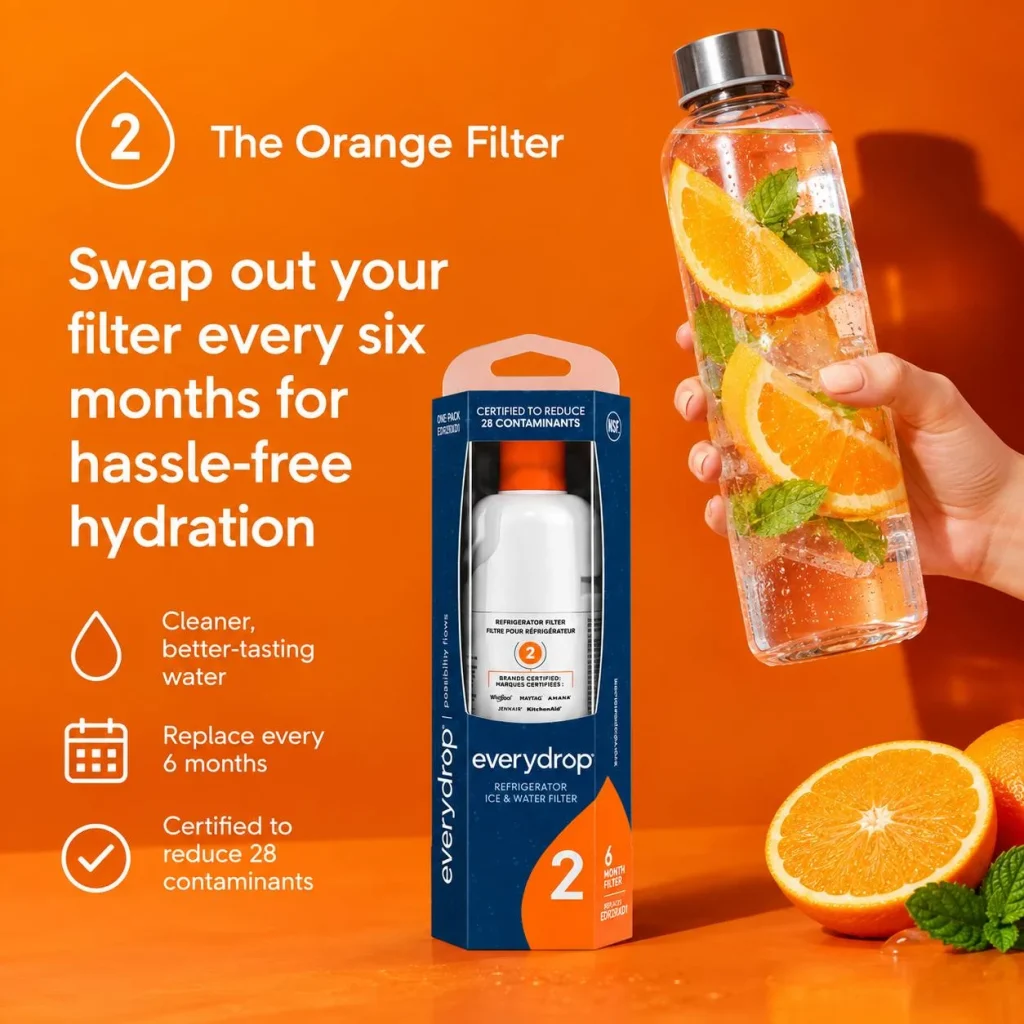
Short answer: every six months, or every 200 gallons, whichever comes first. That is the replacement schedule for everydrop Filters 1, 2, 3 and 4, and it is the same rule most refrigerator filter makers use.
But a lot of people stretch it to a year or more, usually because the water still looks fine. Here is why the six-month mark matters and how to tell when your filter is done.
Why six months?
Refrigerator filters use activated carbon to grab contaminants as water passes through. Carbon has a limited number of places to hold onto those particles and chemicals. As those spots fill up, the filter reduces less and less.
The six-month or 200-gallon rating comes from certification testing. Filters are tested to show they still meet their claims at the end of their rated life. Past that point, there is no guarantee the filter is still doing what the label says.
To put 200 gallons in perspective, that is a little over a gallon a day for six months. A busy household that fills water bottles, cooks with fridge water and uses a lot of ice can hit 200 gallons before six months are up.
Signs your filter needs changing
- The filter indicator light is on. Most refrigerators track time since the last reset and remind you. It is the simplest cue to follow.
- Your water tastes or smells different. A flat taste or a chlorine smell coming back usually means the carbon is worn out.
- The dispenser is slower. A clogged filter restricts flow. If filling a glass suddenly takes longer, the filter is a likely cause.
- Your ice looks cloudy or tastes off. Ice picks up flavors, so it is often the first place you notice a tired filter.
- You cannot remember when you last changed it. If it has been more than six months, or you are not sure, change it.
Clear water is not the same as filtered water
This is the part that catches people out. Many of the contaminants a filter is certified to reduce, such as lead, some pesticides or trace pharmaceuticals, have no color, taste or smell. Your water can look perfectly clear and still be going through a filter that stopped working months ago.
That is why the calendar matters more than the glass test.
What happens if you never change it?
An old filter does not suddenly make your water dangerous, but it stops helping. Flow drops, taste gets worse, and the filter is no longer reducing what it was certified to reduce. A filter left in far too long can also become a place where sediment builds up.
Some people pull the filter out and run the fridge without one. Many refrigerators allow this with a bypass plug, but then you are drinking plain tap water through the fridge lines, with nothing reducing chlorine taste or other contaminants.
Make it easy to remember
- Tie it to the clocks changing. Daylight saving time in March and November is almost exactly six months apart.
- Write the date on the filter with a marker when you install it.
- Keep a spare on hand. When the light comes on, you swap it the same day instead of putting it off. A 2 Pack covers a full year.
- Reset the indicator light after every change so the reminder stays accurate.
Quick answers
Can I change it sooner than six months? Yes. If you have hard water, heavy use or notice slower flow, changing early is fine.
Does an unused filter expire? A sealed filter stored in a cool, dry place keeps well. The six-month clock starts when water starts flowing through it.
Do I need to flush a new filter? Yes. Run about four gallons through the dispenser after installing it to clear air and loose carbon.
Need a replacement? Find your filter number in our guide to which everydrop filter you need, or shop all filters.